Space bedtime stories
› Add their age and what they love
Age
Loves
Optional
Who else is in it?
Optional
Length
2–120 min
4 spreads, written as you read
Mood
gentle third-person narration, a timeless setting, a small kindness at its heart. Unhurried and warm, like a story that has been told for years.
Pictures
Drawn as you reach each one, in the cover's style.
Anything else for this one?
Optional
Free to start. Just a first name, no card. Or read one first
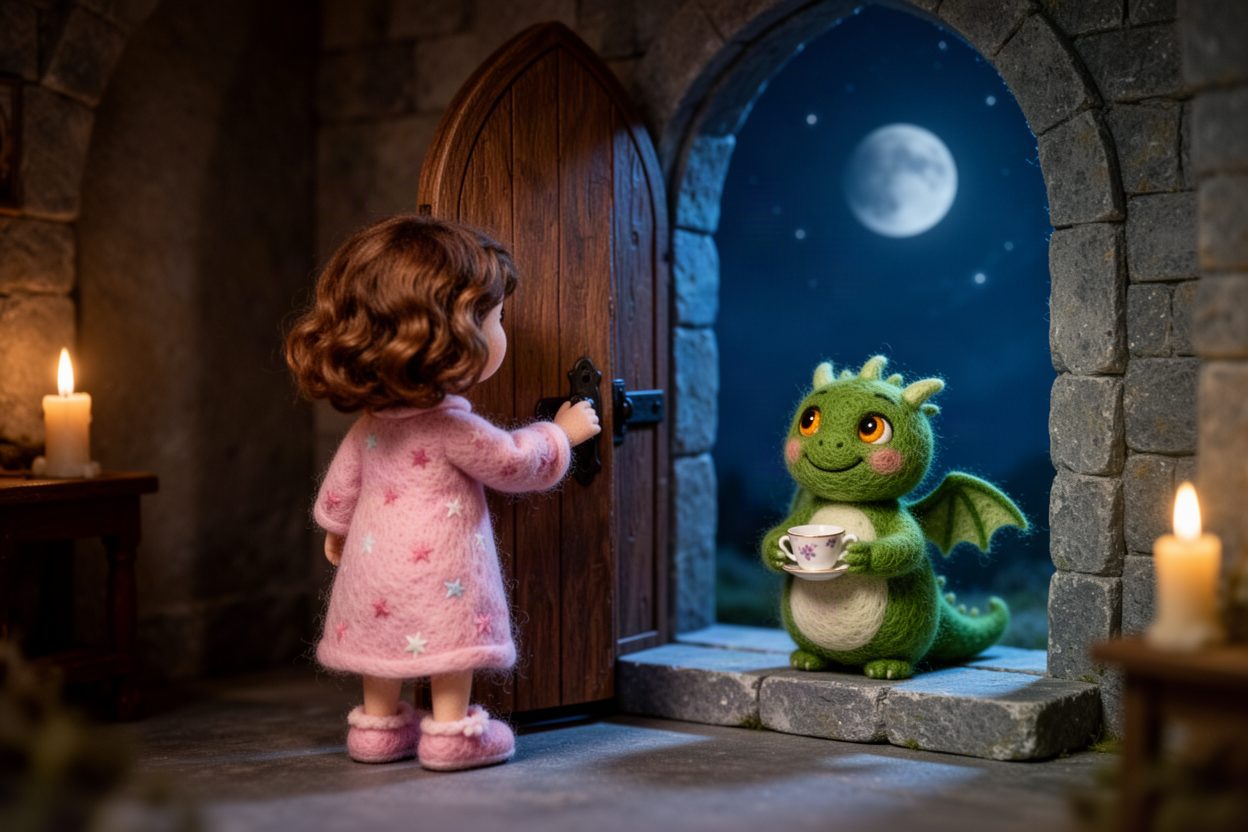
Made on Nightstory
Real stories, written and drawn the way yours will be. The child's name has been changed in each.
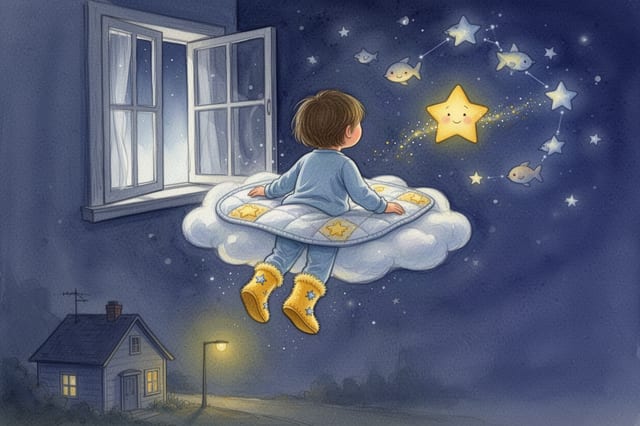
The Star Who Lost Its Way Home
Elsie drifts through a soft, starry dream to help a small lost star find its constellation. It's a quiet, sensory lullaby of a story, full of gentle drifting and cozy wonder.
Read it →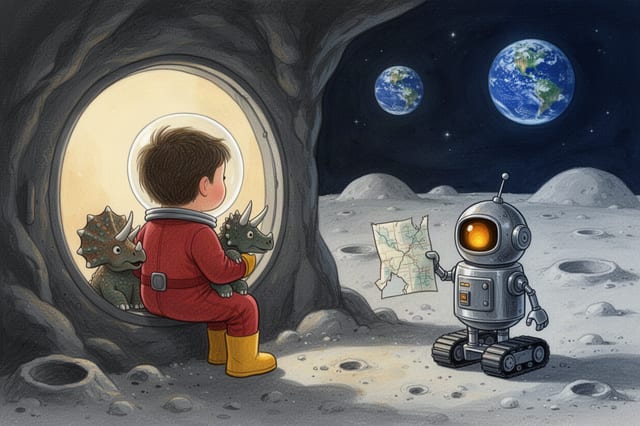
The Map with the Torn Corner
A gentle space mystery: Nell and a forgetful robot follow a torn map across a quiet moon to find where the rocket is parked, noticing small clues along the way. Cozy, starry, and solved by bedtime.
Read it →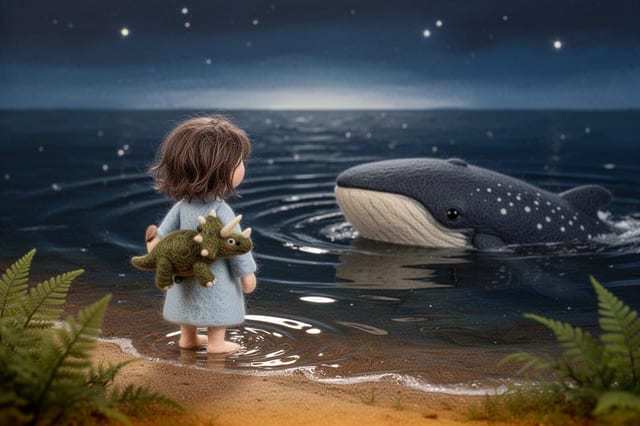
The Whale Who Carried the Moon Up
A sleepy drift across a quiet sea on the back of a gentle whale, where the water rocks like a cradle and the moon rises slow and silver. A soft, hushaby story for the end of a long day.
Read it →
Space is the best bedtime setting there is. It is already dark, it is already quiet, and it ends with everyone floating gently off to sleep. Children who love space want the details right: the countdown, the helmet, the way the Earth looks from far away. A good space bedtime story gives them all of that and brings them home.
Each of ours is written for one child. Tonight they might pilot a small round rocket to check on a lonely moon, or help a lost star find its constellation. Their name is on the mission patch. Tomorrow, the same rocket is waiting.
Written by the people who make Nightstory.
What makes it work at bedtime
Make the rocket small and round
A cosy ship, not a warship. Ask for a rocket with a window seat and a blanket in it and the story becomes a bedroom that flies.
Give the planets personalities
A grumpy red planet, a shy blue one. Children remember characters better than facts, and a planet with feelings is a friend they can visit again tomorrow.
Come home for the ending
The last page of a space story is the landing: the rocket back in the garden, the helmet on the hook, the stars still there out the window.
Questions parents ask
- Will a space story keep my child awake?
- Not the way we write them. Every story keeps to the same rules: no fear, no villains, no cliffhangers, and an ending where the child is safe and sleepy. The space part is the adventure; the last page is always the wind-down.
- Does it teach real things about space?
- It is a story, not a lesson, but it keeps faith with the real sky: the moon is quiet and grey, things float in the rocket, the Earth looks blue from far away. Wonder first, and nothing a curious child would have to unlearn.
- What does it cost?
- The first page is free, with no account. A free account finishes that story and brings one more free story. After that, a story costs 20 stars, and Nightstory Plus brings 840 stars a month, enough for a story every night.
Make tonight's for your child
Their name is all it takes. The first page is free, with no account.
Create tonight's story