The Sound in the Garden Shed at Dusk
When a soft thumping drifts from the garden shed at dusk, Wren takes her sketchbook and follows the clues — a knocked-over paint pot, a trail of leaf prints, and a very polite stegosaurus who only wants a quiet place to draw. A gentle, cozy mystery that ends with everyone tucked in.
Made on Nightstory, and shared. The child's name has been changed.
The Thump in the Dusk
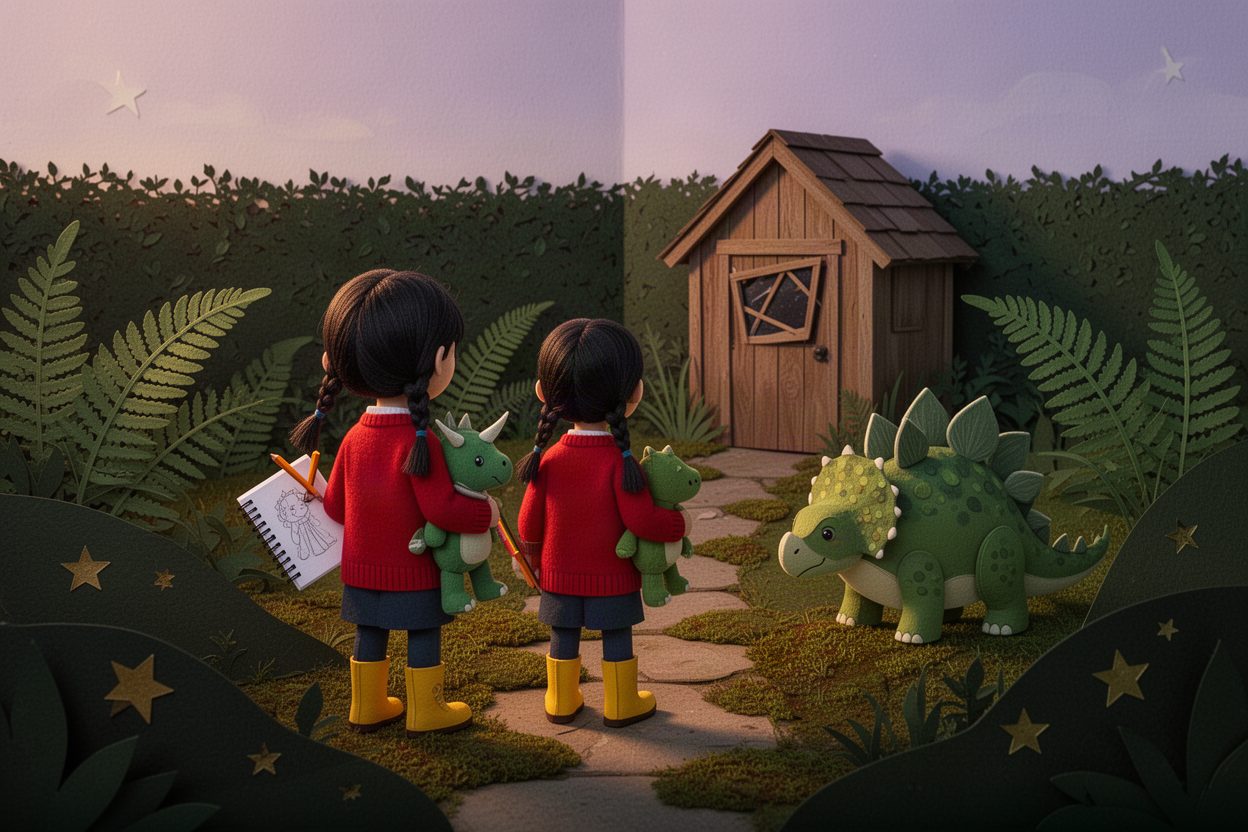
The garden turned gold. Wren sat on the mossy path with her sketchbook open on her knees. She was drawing the fern path, the way the fronds leaned over like sleepy green arms. Her pencil went scritch, scritch. Triceratops sat beside her, watching. Then she heard it. Thump. Wren lifted her pencil. She held it still. Thump, thump. It came from the little wooden shed at the end of the path. The shed with the crooked window. The shed where Papa kept the paint jars and the flower pots. Wren looked at Triceratops. Triceratops looked at Wren. The light was turning from gold to lavender. The ferns were quiet. The hedge was quiet. Only the shed was saying something, soft and slow. Thump. Wren tucked her pencil into the spiral of her sketchbook. She stood up. She held Triceratops under one arm. "Let's go see," she whispered. And she walked down the mossy path toward the shed.
Clues on the Mossy Path
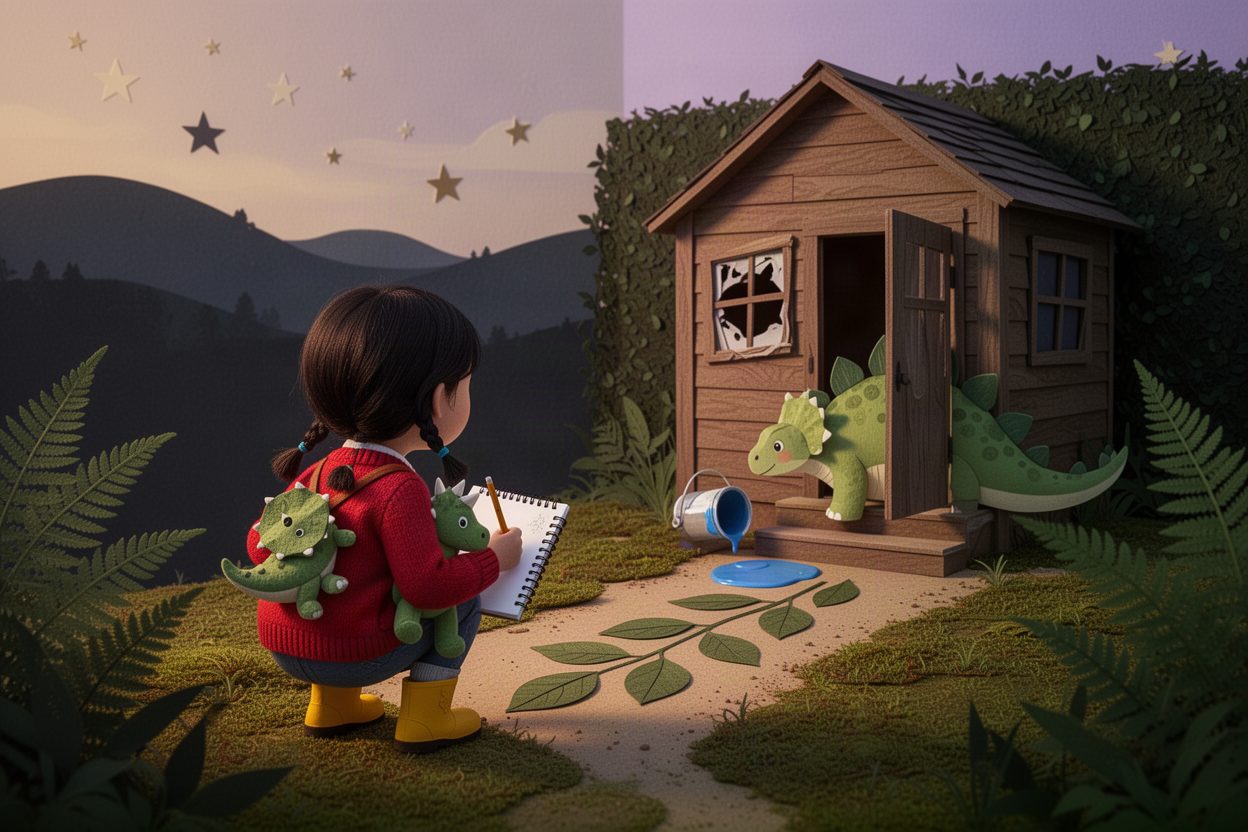
The mossy path was soft under Wren's yellow boots. Step, step, step. The ferns leaned close, but they did not hold her back. Up ahead, the shed door stood open — just a little. A slice of dark, like a half-closed eye. Wren had closed it herself, that morning, after Papa put the flower pots away. Beside the step lay a paint pot, tipped on its side. Blue paint made a small puddle in the dust, round as a moon. Wren knelt down. In the dust, in the soft grey dust, she saw prints. Leaf-shaped prints. One, two, three of them, going in through the doorway. She put her own boot beside one print. The print was bigger. Much bigger. Wren looked at Triceratops. Triceratops looked at Wren. "Someone's been drawing," Wren whispered. "And someone's still in there." She stood up very slowly. She put her hand on the door.
Inside the Shed
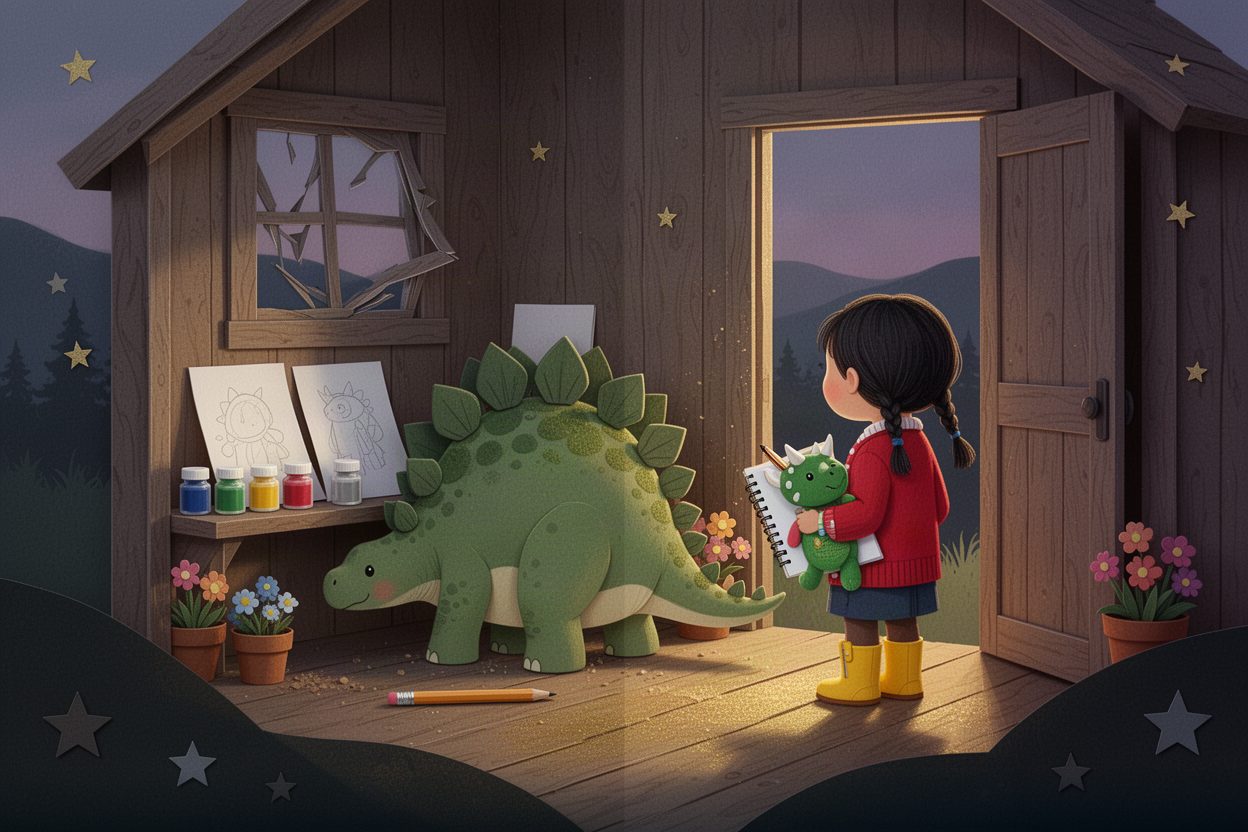
Wren pushed the door. It opened with a slow creak. Inside, the shed smelled of wood and paint. A pencil lay on the floor, rolled all the way from the shelf. Beside it, papers were spread out — one, two, three of them — right along the low shelf, next to the paint jars. And there, in the soft dark, stood a stegosaurus. It was round-backed and moss-green. Its plates went up its back like little green hills. Its tail was very long, and very close to the flower pots. It turned its small face to Wren. It blinked. "Oh," said the stegosaurus, very politely. "Hello. I am sorry about the thumping. That is my tail. It knocks things over. I only wanted to draw." Wren looked at the papers. On the top one, in careful pencil, was the fern path. She smiled. "You found my pencils," she said. The stegosaurus nodded. "They are very good pencils," it said.
The Drawing of the Garden
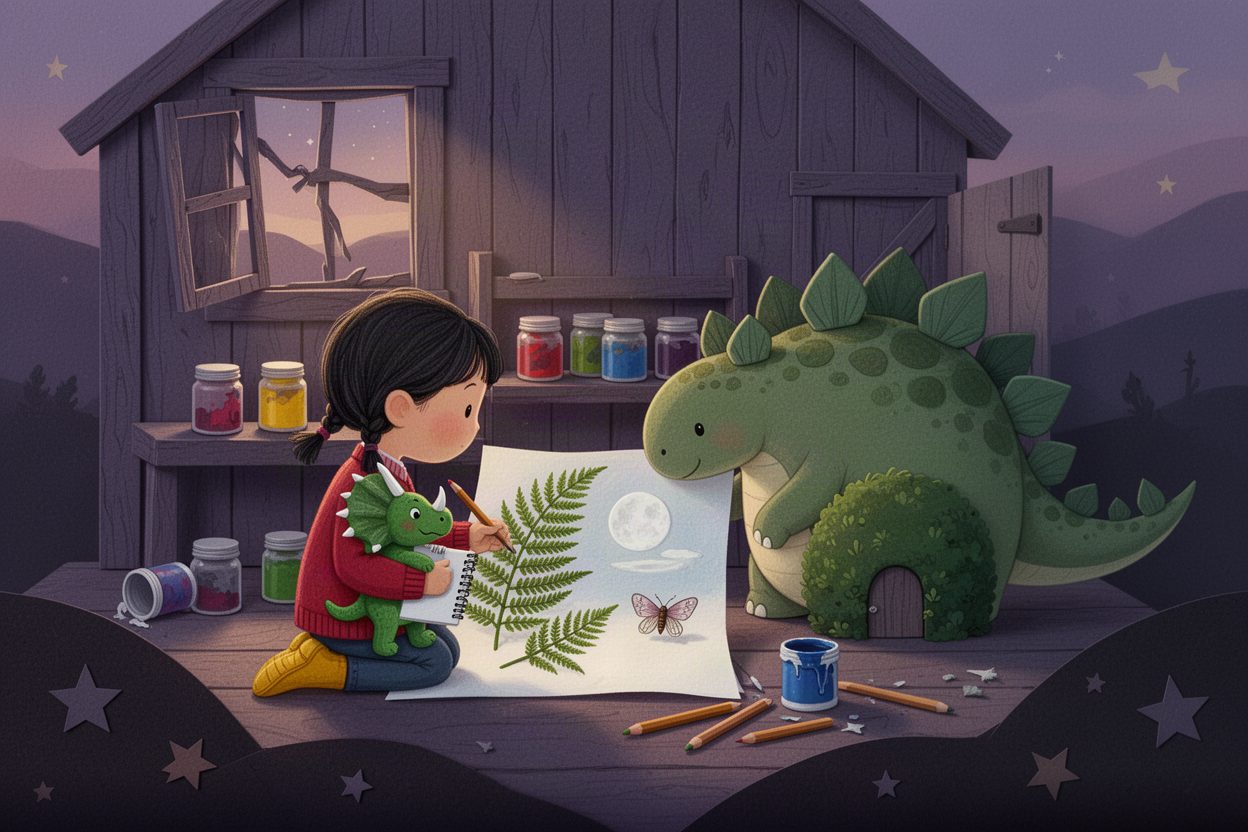
Wren knelt beside the shelf. The paper was almost as big as her sketchbook, and the drawing on it was the fern path — the very same path she had been drawing, with the fronds leaning over like sleepy green arms. "You drew this," she said. The stegosaurus nodded. "At dusk," it said. "Dusk is my favourite." Wren looked at the empty sky on the paper. "It needs the moon," she said. She picked up her pencil and drew a small round moon, low and pale. The stegosaurus watched. Then it lifted one careful foot and pressed a soft smudge of moth beside the ferns. Wren added two wings. The moth looked like it was flying home. "And here," Wren said, "is the hedgehog's hedge." She drew the big hedge, round and snug, with a little arch at the bottom. The stegosaurus made a small happy sound, like a kettle just before it sings. They leaned together over the paper. Scritch, scritch. The shed grew dim and soft around them.
A Warm Spot Under the Hedge
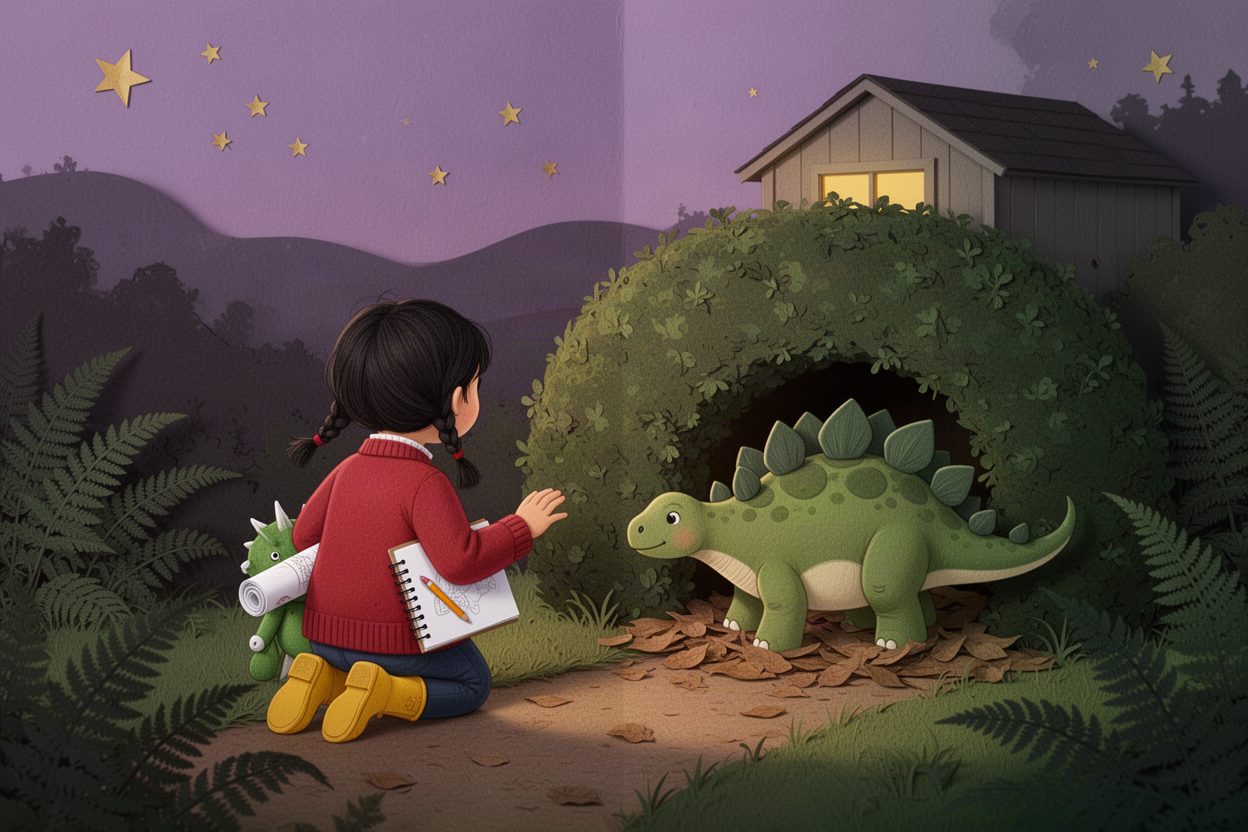
Outside, the sky had turned the colour of lavender. The ferns looked sleepy. The garden was putting itself to bed. Wren rolled up the drawing, very carefully, and tucked it under her arm. "Where do you sleep?" she asked. The stegosaurus looked at the dark corners of the shed. It looked at its own long tail. It did not say anything. Wren knew. "Come with me," she said. She led the way down the mossy path. The stegosaurus walked behind her, slow and round, its plates catching the last of the light. Its tail went swish, swish through the ferns. At the big hedge, Wren stopped. There was a soft hollow underneath, dry and snug, like a little room made of leaves. "Here," said Wren. "The wind can't find you here." The stegosaurus stepped inside. It turned around twice. Then it curled its tail close and folded its feet under, and its plates settled down like hills at night. "Thank you," it said, very politely. "Goodnight, Wren." "Goodnight, Stegosaurus," said Wren.
Home and Tucked In
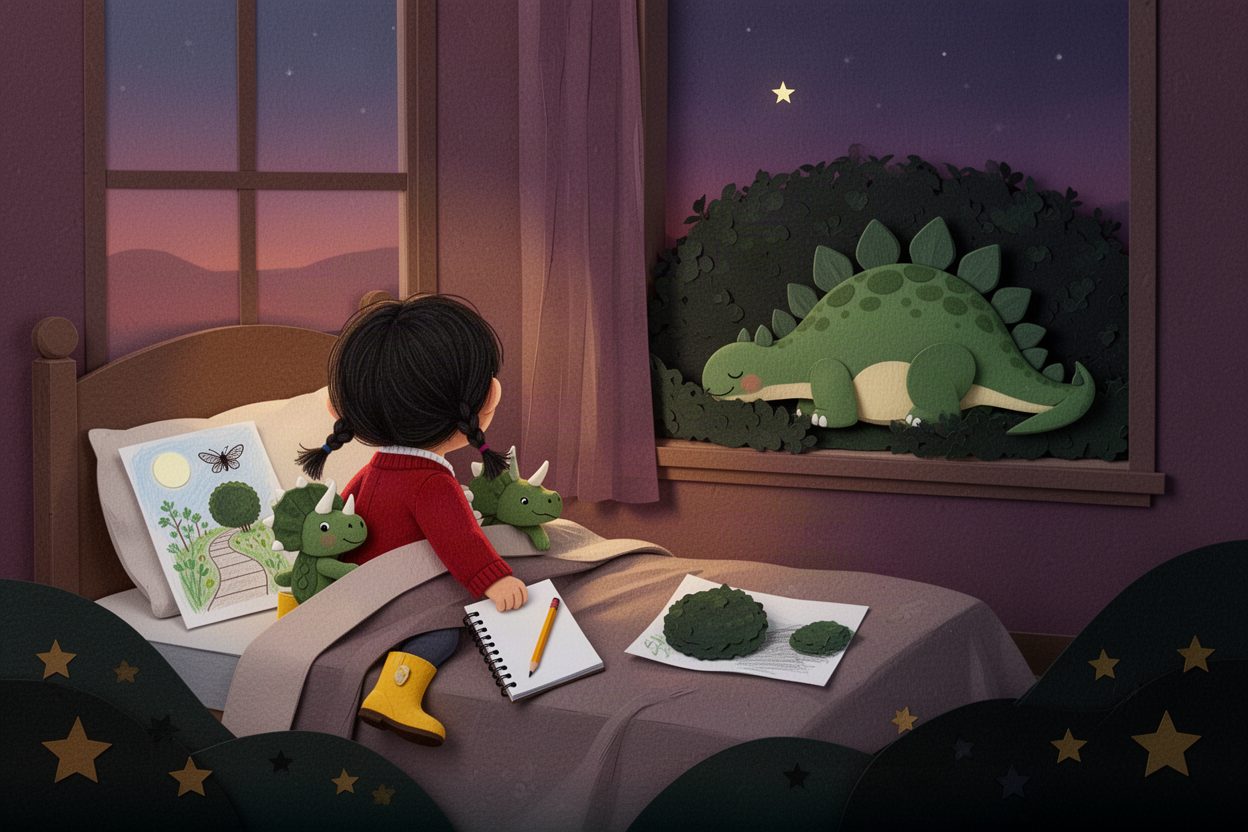
Wren walked home along the mossy path. Her yellow boots went squish, squish on the soft green moss. The sky was plum-purple now, and one star had come out to watch her. At the door, she stepped out of her boots. One. Two. She set them side by side, the way she always did. Inside, her bed was warm and waiting. She climbed in and pulled the blanket up to her chin. Her triceratops went under her arm, right where it belonged. Beside her on the pillow, she laid the drawing. The fern path. The moon. The moth flying home. The hedgehog's hedge, round and snug. Out in the garden, under the big hedge, the stegosaurus curled its tail close. Its plates settled down like hills at night. The ferns stopped swaying. The shed went quiet. Wren yawned one big yawn. She closed her eyes. The last of the light slipped away, and the whole garden, and Wren, and the stegosaurus all went softly to sleep.
The end.